Introduction
When you start buying display or showcase lights from China, it is easy to think only about price. You open a spreadsheet and stare at the quote.
But in real projects like jewelry stores, watch shops, museums, and retail setups, the cheapest pick seems smart. Later, it often costs more. Delayed shipments and bad lighting hurt you. Flicker, poor color, and hard-to-replace parts drain your profit and your reputation.
Why Should You Look Beyond Price When Choosing A Lighting Factory?
Are you looking at one quote that is 20–30% lower than the rest? Are you wondering if it is a hidden deal? A low price often means something else was cut. Maybe parts, tests, support, or safety.
A factory that builds stable magnetic track light systems, mini spotlights, and bars for high-end displays needs good optics, drivers, thermal design, and quality checks. Those things cost money. When the price is too low, something is missing inside the product. It might be the driver, the PCB, or the metal housing parts.
Here’s a quick way to reframe your thinking:
|
Question To Ask Yourself |
Short-Term View |
Long-Term View |
|
“Is this the lowest price?” |
Focus on saving now |
Often leads to higher failure and maintenance costs |
|
“Can this supplier protect my project?” |
Focus on reliability over 3–5 years |
Less downtime, fewer replacements, smoother rollouts |
|
“Do they understand display lighting needs?” |
Generic fixtures for any room |
Tuned lighting for jewelry and watches, for art and glass displays. |
Price still matters. But it should come last, not be the first and only thing you decide on.
How Do You Check A Factory’s Technical Skills And Product Quality?
Do you feel confused when a supplier sends a spec sheet of numbers? There is no clear explanation to guide you. A serious factory should be able to explain their technology in simple language.
On Lightrix’s own site, you’ll see many products and blogs that break down these basics—for example, guides on LED showcase lighting, glare control, and thermal design for display cases.
Simple comparison checklist
|
Technical Topic |
Weak Factory Answer |
Strong Factory Answer |
|
CRI and color quality |
“CRI is good, don’t worry.” |
Explains CRI range (0–100), recommends 90+ for retail and museum displays, with data. |
|
Beam angle and optics |
“Standard lens, 30° only.” |
Offers several angles, explains which suits your cabinets and ceiling height. |
|
Power and drivers |
“Generic driver from market.” |
Uses branded or tested drivers, shares driver specs and test reports. |
|
Application experience |
“We do all kinds of lights.” |
Shows real projects for jewelry showcase lighting and museums. |
If a factory cannot explain these things in clear, simple words, it’s a warning sign.
How Can You Judge Design And Engineering Capabilities, Not Just Assembly?
Do you want a partner who can only “build what you send”, or one who can think with you? In display work, many projects need custom details: special lengths, custom finishes, or tiny fixtures that disappear inside slim cabinets.
Good factories don’t just assemble. They design:
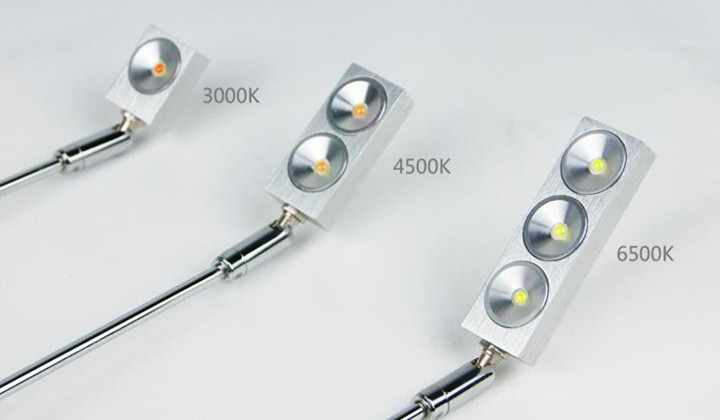
- They offer adjustable optics, tilt and rotation, and small heads for Mini LED pole lighting and mini track spots.
- They can tweak beam angles, CCT ranges, and housing shapes for your brand look.
- They can turn a sketch or drawing into a real prototype, then improve it based on your feedback.
What Quality Control And Testing Steps Should You Expect?
Do you worry that some factories “test” by simply turning the light on once? Real QC is a system, not a quick switch.
Look for proof of:
- Incoming inspection for LEDs, drivers, housings, and connectors.
- In-process checks, so defects are caught before final assembly.
- Aging tests where fixtures run for several hours (or more) at working temperature.
- Random sampling and measurement of lumen output, CCT, and CRI.
Lightrix’s own content on thermal management explains why heat and long-term stability tests matter so much for cabinet lights that run all day.
Which Certifications And Compliance Support Should A Factory Provide?
You need valid certificates, test reports, and sometimes support when your local lab or customer asks questions.
Common certificates for showcase and track lighting include:
- CE and RoHS for the European market.
- UL or ETL for North America.
- CB/IEC reports that support multiple regions.
How Do Communication And Responsiveness Shape The Project?
Have you ever had a “silent” supplier who replies days later with one-line answers? That’s dangerous when you are in the middle of site work.
A reliable partner:
- Replies within 24 hours on working days.
- Answers technical questions in detail, not with “yes/no”.
- Shares drawings, photos, and wiring diagrams without you chasing them.
Communication checklist
|
Signal |
Red Flag Example |
Good Sign Example |
|
Response time |
3–4 days with short replies |
Same day or next day with clear answers |
|
Handling of problems |
Blame shipping or customer |
Offers solutions, replacement plan, and root cause analysis |
|
Documentation quality |
No drawings, messy labels |
Clean datasheets, wiring diagrams, and label samples |
What Does Real After-Sales Support And Warranty Look Like?
Do you worry about what will happen if a batch fails after installation? A low-price factory may disappear when things go wrong. A good partner writes down clear support rules.
Look for:
- Written warranty period and terms (for example 3–5 years for many LED showcase lighting projects).
- A simple claim process (photos, serial numbers, replacement plan).
- Access to spare parts: track sections, drivers, and heads for magnetic showcase track pole lighting and pole spots.
Is This Supplier A Short-Term Vendor Or A Long-Term Partner?
Do you want a quick one-time buy, or a stable partner who grows with you? This choice is key. It is your final question today.
A short-term vendor:
- Competes only on price.
- Says yes to everything, but offers little guidance.
- Treats every order as a one-off.
A long-term partner:
- Understands your brand, product mix, and store or museum style.
- Shares simple tips to avoid jewelry display lighting mistakes. Think glare, hot spots, and harsh, uneven color across pieces.
- It saves your specs. Each new order matches your first batch exactly.
Conclusion
In the end, the price on a sheet is only one line. The real value of a Chinese lighting factory lives in what you cannot see at first glance.
When you judge a factory with the right questions, you stop buying “cheap lights” and start investing in reliable magnetic track lighting, mini spots, and poles that support your brand for years. You protect your clients, your projects, and your peace of mind—one well-chosen partner at a time.
External Links:
- https://en.wikipedia.org/wiki/Printed_circuit_board
- https://en.wikipedia.org/wiki/Color_rendering_index
- https://en.wikipedia.org/wiki/Light-emitting_diode
Post time: Feb-05-2026