Introduce
Have you noticed that a lot of outdoor lights turn on too early in winter or stay on past sunrise in summer? Well, that is the job of one tiny component: the photocell sensor, also called a photocontrol or photocell switch.
The changes that occur in daylight duration due to seasons are quite a challenge in outdoor lighting management. Sunrise and sunset times shift, and this disrupts the pattern between seasons. So a photocell that performs well in July may not behave the same in December.
I will be breaking down exactly how photocells sense and respond to changing daylight conditions, and which Long-Join products can help solve the dreaded seasonal daylight variation problem.
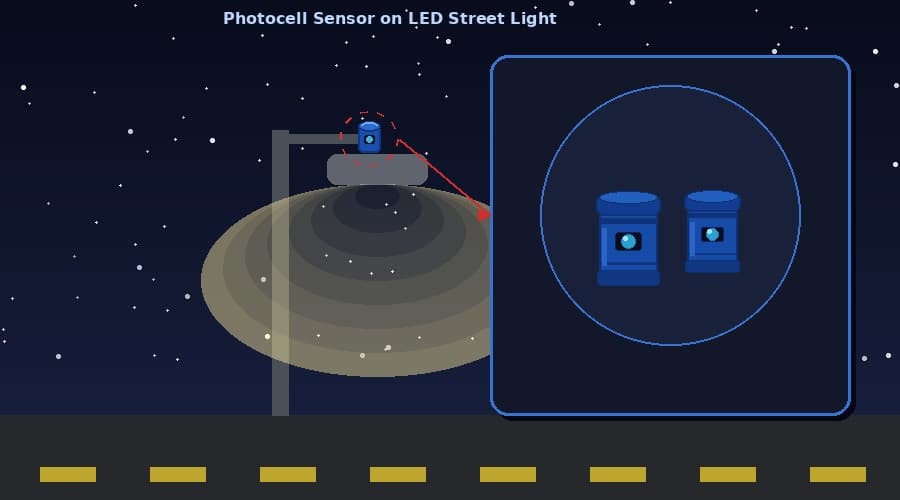
How Do Photocells Sense Daylight?
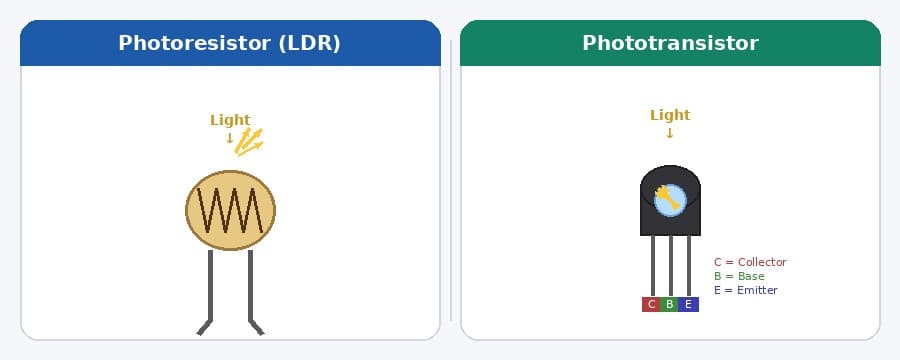
Now, how do these small photocells detect light changes? They do this through a light-sensitive component. In outdoor lighting, you will either find the photoresistor/Light Dependent Resistor (LDR) or the phototransistor. Let’s take a look at how they function.
Light Dependent Resistors (LDR)
An LDR is a photoresistor, which simply means that it responds to light by changing its electrical resistance. The resistance drops whenever it faces bright conditions, and when light begins to reduce, it increases said resistance, leading to a signal that activates the connected luminaire.
Although LDRs are known to be affordable and durable, they are relatively slow to respond, and their long-term performance is known to be affected by exposure to temperature extremes.
Phototransistors
Phototransistors have a relatively faster but similar mode of operation. Whenever light hits a transistor, it generates a current that activates a control circuit. This makes phototransistors more suitable for places where a quick, accurate response to changing light levels matters, like in a dusk to dawn photocell system that needs to distinguish between actual sunset and a passing cloud.
A phototransistor may also include an Infrared (IR) filter, which ensures the photocell only responds to the visible light spectrum and not IR-heavy light sources such as certain street lamps and vehicle headlights.
What Are the Different Long-Join Photocells?
Long-Join (Shanghai Long-join Intelligent Technology Inc.) has been manufacturing photocells and lighting control components since 1993, supplying products to over 90 countries. Their lineup includes everything from simple mechanical controllers to intelligent photocell sensor models capable of seasonal adaptation. Let me walk you through how each product handles seasonal daylight variation.
JL-103A: Mechanical Bimetal Photocell
The JL-103A is a mechanical photocell option. It uses a bimetal sensing element (i.e a strip of two different metals bonded together that bends in response to heat generated by absorbed light). As ambient light increases, the strip heats and bends, breaking the circuit and switching the light off.
Transistors are not involved in this case, and this creates a flaw for seasonal change adjustment. The JL-103A reacts to immediate light conditions without any learning capability, so it’s best suited for straightforward installations where consistent, reliable on/off control matters more than precision.
JL-205C: Phototransistor-Based Photocell
The JL-205C uses a phototransistor for improved sensitivity. It includes a built-in delay response that prevents the light from switching off due to car headlights or flickering during a brief cloud passage. The JL-205C is a suitable choice for most standard street lighting applications.
JL-207C: IR-Filtered Phototransistor Photocell
The JL-207C adds IR filtering to the phototransistor design, which makes it very useful in environments where other light sources often confuse the sensor, such as parking lots, highways, and industrial zones.
With the IR filter in place, the JL-207C focuses only on visible ambient light, giving it a more accurate read on sunrise and sunset conditions.
JL-243C and JL-253C: Intelligent Photocells with 7-Day Averaging
These two models are Long-Join’s most developed approach to seasonal adaptation. Rather than reacting purely to instantaneous lux readings, the JL-243C and JL-253C collect and store ambient light data over a rolling window of approximately seven days. The data collected is used to calculate a statistical average, which then becomes the threshold for light switching.
This 7-day learning mechanism allows the photocell to adjust naturally to seasonal shifts without any manual reprogramming. A unit installed in summer will still perform correctly in winter, because it has been continuously updating its reference data throughout the year.
For smart city deployments, large-scale infrastructure, and projects with strict energy efficiency targets, the JL-243C and JL-253C are worth serious consideration. You can explore the full JL product range.
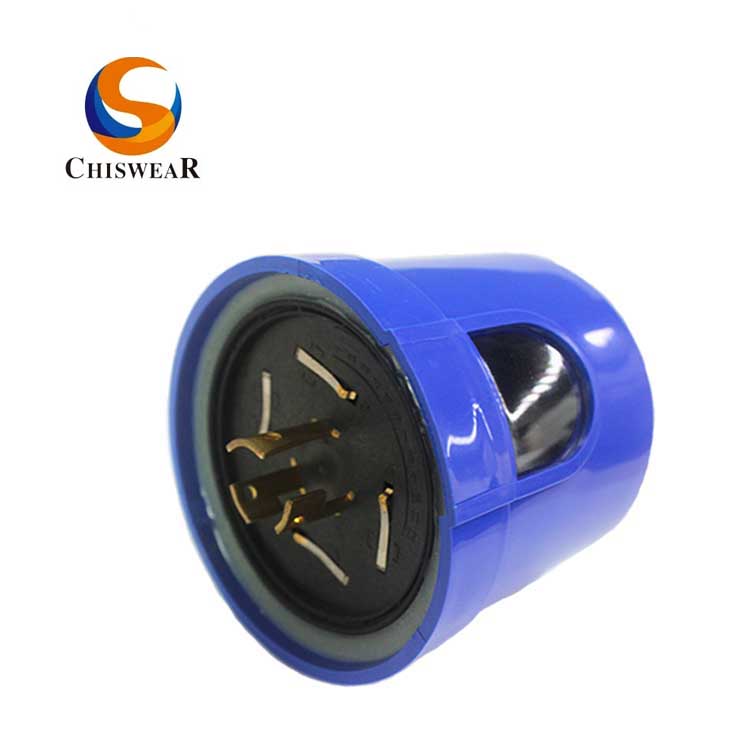
Comparison: Long-Join Photocell Models and Seasonal Adaptation Capability
The table below summarizes the key differences between Long-Join’s photocell models in terms of sensor type, switching logic, and their ability to handle seasonal daylight variation.
| Product Model | Sensor Type | Adjustment Method | Adapts to Seasons? | Best Use Case |
| JL-103A | Mechanical bimetal sensor | Fixed threshold switch; no delay logic | Low — reacts to instantaneous light only | Simple, low-cost installations needing basic on/off control |
| JL-205C | Phototransistor | Instant light-intensity response; 3–20s delay | Medium — reacts well, but no long-term averaging | General street lighting in stable climates |
| JL-207C | IR-filtered phototransistor | Filters out IR interference; 3–20s delay response | High — improved accuracy across variable conditions | Complex outdoor environments with mixed light sources |
| JL-243C | Phototransistor | Calculates 7-day average lux; dynamic threshold | High — self-calibrates across seasonal shifts | Smart city projects needing autonomous adaptation |
| JL-253C | Phototransistor | Same 7-day statistical averaging as JL-243C | High — upgraded performance over JL-243C | High-demand infrastructure with energy optimization goals |
For procurement teams and lighting engineers comparing options, the right choice depends on your project’s scale, location, and energy requirements. If you need OEM-compatible components, Long-Join also supplies NEMA receptacles, Zhaga covers and base accessories, and 7-pin NEMA receptacle systems for fixture integration. More information can be found in the Long-Join’s full photocell catalog.
Conclusion
Long-Join’s photocell lineup addresses seasonal daylight variation at every level of complexity. The JL-103A and JL-205C offer dependable switching for standard applications. The JL-207C adds IR filtering for environments with interference from competing light sources. And the JL-243C and JL-253C take adaptation the furthest with a rolling 7-day lux average to recalibrate switching thresholds continuously throughout the year, ensuring your outdoor lighting responds accurately to real seasonal conditions without manual intervention.
External Links
- https://en.wikipedia.org/wiki/Photoresistor
- https://www.electronics-notes.com/articles/electronic_components/resistors/light-dependent-resistor-ldr.php
- https://en.wikipedia.org/wiki/Photodiode#Related_devices
Post time: Mar-25-2026