Introduction
In North American countries, one topic that often comes up during the decision on lighting systems is certification. It’s not a formality, but a qualification gate.
Products that haven’t been independently tested and listed by a recognised body often can’t get through distribution, can’t be specified on public projects, and create liability exposure for the contractor or buyer who installs them.
For photocell procurement specifically, certification matters because these are switching devices operating at mains voltage in outdoor environments, and the consequences of a failure go beyond the photocell itself.
Long-Join’s JL-403C and JL-207C both carry the certifications that North American buyers and specifiers actually require. This article explains what those certifications mean and why they change the procurement calculus.
What Are the Main Certification Standards Buyers Should Know?
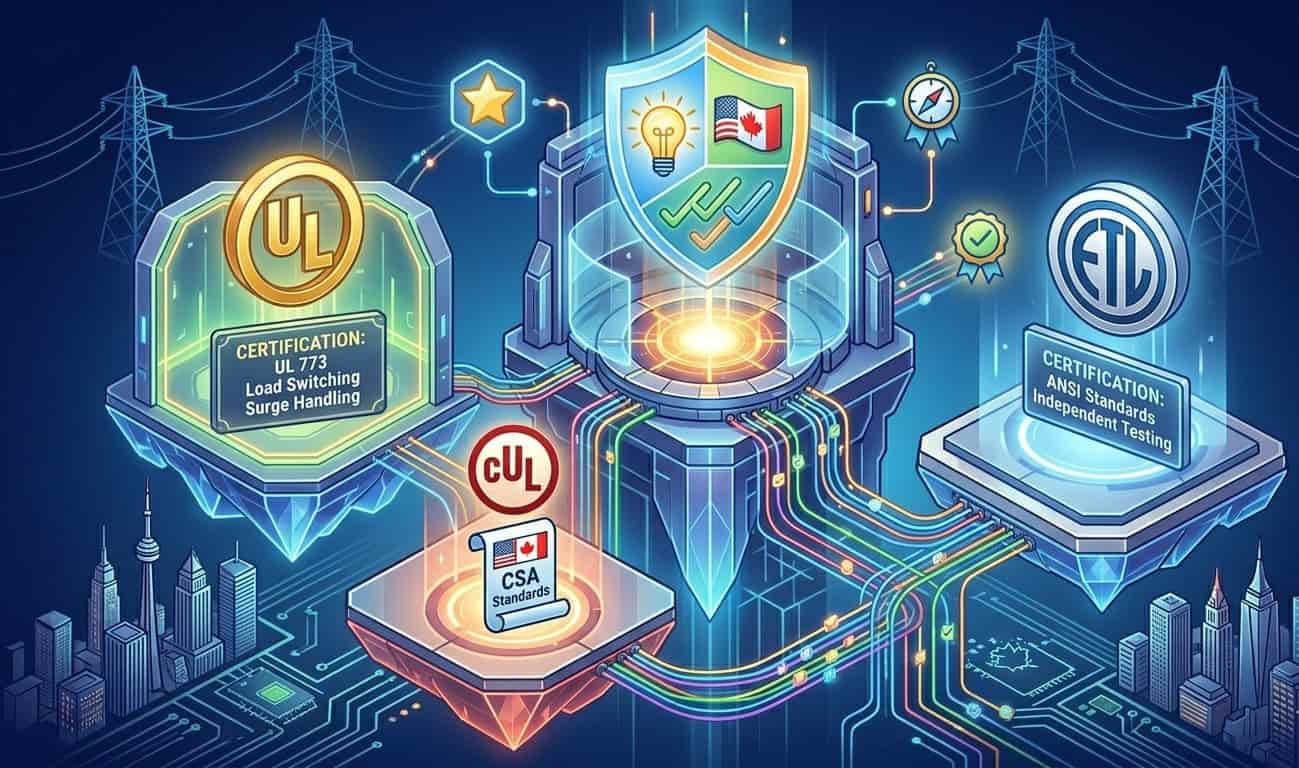
Three certification bodies cover the North American market for electrical safety, and understanding the difference between them helps buyers read product documentation accurately.
UL (Underwriters Laboratories)
UL is the most widely recognised independent safety certification body in the United States. It has been testing and certifying electrical products for over a century. UL listing means a product has been independently tested against defined safety standards and found to meet them.
For photocontrols, the relevant standard is UL 773 for plug-in locking-type photocontrols and UL 773A for non-industrial photoelectric switches. A UL-listed photocell has been tested for load switching performance, high-current surge handling, lifecycle switching, and safety under fault conditions.
cUL (Canadian Underwriters Laboratories)
cUL is the Canadian equivalent of UL certification, issued under the same UL framework but tested against Canadian Standards Association (CSA) requirements.
A product with both UL and cUL listing covers both the US and Canadian markets under a single certification framework. For buyers sourcing projects that span both countries, or distributors supplying both markets, dual UL/cUL listing simplifies compliance documentation significantly.
ETL (Electrical Testing Laboratories)
ETL certification is issued by Intertek and is nationally recognised in North America alongside UL. Technically, the testing standards applied are equivalent. A product carrying an ETL mark has been tested to the same ANSI and UL standards as a UL-listed product.
Many procurement teams and specifiers accept ETL on equal terms with UL, though some municipal tenders specify UL listing explicitly. Carrying both gives a product the broadest possible market coverage.
What Is the Certification Status of the JL-403C and JL-207C?
Both models carry multiple North American certifications, with the JL-403C covering the broadest combination for buyers operating across both the US and Canadian markets.
|
Product |
UL Certified |
cUL Certified |
ETL Certified |
Certification Advantages |
| JL-403C | Yes | Yes | Yes | Suitable for the North American dual-market with multiple layers of safety assurance |
| JL-207C | Yes | Can apply for validation | Yes | Meets US market requirements, excellent technical performance, and strict production supervision |
The JL-403C‘s triple certification status is directly useful for distributors and contractors who work across both sides of the border. A single product that satisfies US and Canadian compliance requirements simultaneously simplifies procurement, inventory, and project documentation.
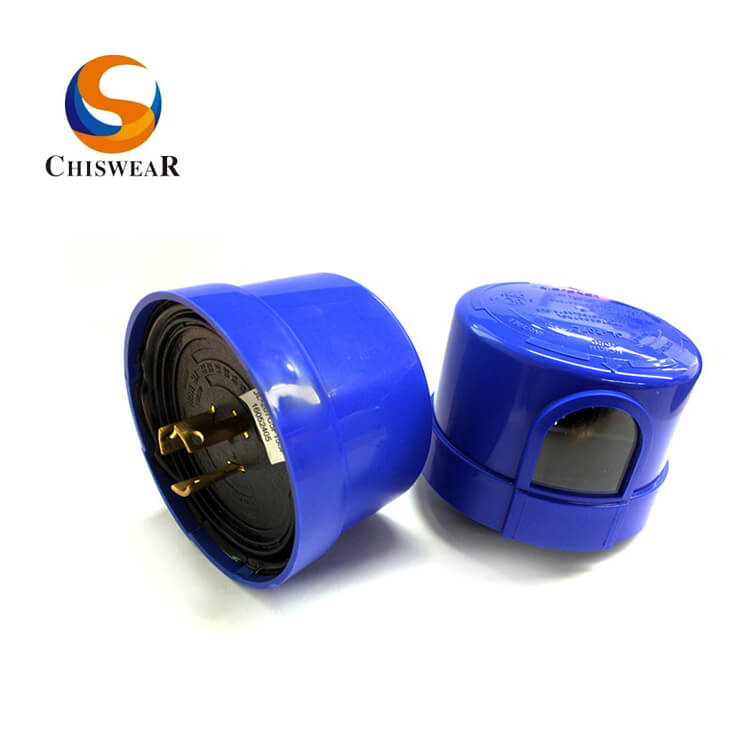
The JL-207C carries UL and ETL listing and meets US market requirements fully. It also consists of these technical specifications:
- IR-filtered phototransistor
- Zero-crossing switching
- HP relay option
- MOV surge protection up to 546J/13,000A
These specifications make the JL-207C the stronger choice for demanding industrial and municipal applications where specification depth matters alongside the certification status.
Why Does Certification Actually Matter for Purchasing Decisions?
Certification affects three things that procurement teams care about directly:
Safety liability
A UL-listed photocontrol has been independently tested for the failure modes that create safety risks, such as:
- Insulation breakdown
- Overloading
- Surge damage
- Contact failure.
If a non-listed product fails and causes a fire or electrical injury, the liability exposure for the installer and buyer is significantly greater than for a certified product that failed despite meeting listed standards. For commercial and municipal buyers, this is not an abstract concern.
Market access
Most US and Canadian electrical distributors will not stock unlisted products. Most electrical inspectors will not pass an installation using unlisted components in jurisdictions where listed products are required.
Municipal and government tenders routinely specify UL listing as a qualification requirement, not an evaluation criterion. Without it, a product simply cannot enter the mainstream procurement pipeline.
Customer trust and long-term relationships
For distributors and lighting contractors building long-term supply relationships, the certification status of the products they recommend reflects on their own credibility.
Specifying a listed product that performs reliably over the years builds the relationship. Specifying an unlisted product that creates a compliance problem or a field failure does the opposite.
Get Certified Photocells
UL, cUL, and ETL certification on a photocell isn’t a marketing point; it’s the difference between a product that can enter North American distribution and one that can’t. The JL-403C’s triple UL/cUL/ETL listing covers both the US and Canadian markets with full compliance documentation, while the JL-207C’s UL and ETL listing meets US market requirements with a technical specification suited to demanding industrial and municipal applications.
For buyers sourcing photocells for North American projects, starting with these listed products in Chiswear’s catalog removes compliance risk from the procurement decision entirely.
Frequently Asked Questions
Q1: What is the difference between UL and ETL certification?
Both are nationally recognised in North America and tested against the same ANSI and UL standards. UL is issued by Underwriters Laboratories, and ETL is issued by Intertek. Technically, they carry equivalent weight, though some municipal tenders specify UL listing by name. Carrying both gives a product the widest possible market acceptance.
Q2: Why do some products carry both UL and cUL certification?
cUL demonstrates compliance with Canadian safety standards under the same UL framework. A product that covers the US and Canadian markets without requiring separate certification processes for each.
Q3: What are the main certification advantages of the JL-403C and JL-207C?
The JL-403C’s UL, cUL, and ETL triple listing gives it the broadest North American market coverage of any single photocell model in Long-Join’s range.
The JL-207C’s UL and ETL listing covers the US market fully, and its technical depth makes it a stronger specification for demanding projects beyond basic compliance requirements.
Q4: Can products without UL certification be sold in the North American market?
Some can enter through certain channels, but mainstream electrical distribution, government tenders, and inspected commercial installations typically require listed products. The compliance risk and reputational exposure of specifying unlisted products in these contexts generally outweigh any cost savings on the unit price.
Q5: How does Long-Join ensure products continue to meet certification standards over time?
Through ISO 9001:2015-certified manufacturing processes and periodic re-testing under the relevant certification body’s surveillance programme. UL and ETL listings are not one-time approvals; they require ongoing production compliance and periodic audits to maintain.
External Links
- https://www.ul.com/services/certification
- https://canada.ul.com/aboutus/ulcmarkproductcertification/
- https://www.intertek.com/product-certification-marks/etl/
- https://www.intertek.com/
Post time: May-27-2026